Pages

Thursday, October 6, 2016

A primer on biological insect controls


Bt works wonders on the tomato hornworm
There are a number of products on the market that advertise they are biological insect controllers, and it is important to understand how some of these products work. Just because a product is made from natural ingredients, does not mean it is necessarily non-toxic or safe for the environment. 

For an organic garden, you need to keep in mind what your priorities are. If you do not want to use any pesticides what-so-ever, then handpicking bugs and barriers (such as floating row covers) may be your best options. There may come a point when you need some help, and there are products out there that can do that for you.

BACILLUS THURINGIENSIS

I am a big proponent of Bt (Bacillus thuringiensis and its counterparts) as it is totally biodegradable, non-toxic to humans, pets, fish and birds. It affects the digestive system of caterpillars when they eat the treated plant. Although it will also kill caterpillars of butterflies, they rarely feed on your vegetable garden plants. To be safe, don’t spray ornamental flowers that normally attract butterflies. Another reason I consider Bt a really good product is that you can use it as a preventative. It is a “non-contact” insect killer, which means the insects don’t have to be present and you don’t have to spray the actual bug. Bt can be used on products sold as organic.

ROTENONE

Although this insecticide is made from natural ingredients, is biodegradable, but it is not non-toxic. It is a contact insecticide (you have to actually spray the insect to kill it) and is not allowed to be used on produce to be sold as organic.

PYRETHRUM

This too is a synthetic insecticide even though it is made from Chrysanthemums.  It is highly toxic to fish and honey bees. It is a contact insecticide, and considered to have a low toxicity to humans. 

SAFER INSECTICIDAL SOAP

This product is made from natural oils and animal fats and is effective against aphids, scale and other soft bodied insects. It is considered non-toxic to humans and approved for use on organic produce. The downside is if you apply it in really hot weather in a sunny location you could damage your plants. 


Saturday, October 1, 2016

Critter proofing your garden


My critter proof fence.

There is nothing worse than spending a lot of time and energy into preparing your garden soil, planting seeds and seedlings, and nurturing everything so you will have a good harvest only to have ground squirrels wreck havoc.

Birds are easier to deal with, since bird netting will keep most of them at bay. Fencing keeps out most animals like skunks and rabbits, especially if you bury the fence 8 to 12 inches so they can’t dig under. But ground squirrels, as cute as they are, are far more industrious and determined that most other problem critters.

Poisoning wildlife serves no real purpose other than upsetting the balance of nature. If you rely on poison you risk poisoning predators such as hawks, owls, coyotes and bobcats as well as the squirrels, and will spend a fortune. Squirrels are very prolific because they are darned low on the food chain.

There are also many repellents on the market touted to keep animals away from your plants. Some gardeners swear by pepper spray, Lifebuoy soap, certain aromatic plants, and mothballs, to name a few. However, my experience has been that nothing works other than a physical barrier. I’ve seen rabbits eat plants coated with cayenne pepper, so the fact is, you can’t rely on these products.

If you are just starting a garden and know ground squirrels live in your area, build a defense system early since once they figure out you have goodies planted, they try harder to get in. It does not matter how tiny the openings are in your fence, ground squirrels are not only adept at digging under fences, they also climb over fences. A 4 foot tall fence is nothing to these acrobats.

A non-climbable fence is a more expensive option than any wire fence, including chain link. What is considered non-climbable? Think something slick, such as corrugated metal or sheet metal. Yes, it will look ugly. But yes, it will work. You will need sturdy posts set in concrete, however, so it does not blow over in high winds.

Another option is to cut metal and attach to your existing fence, provided the openings on your metal fencing are no larger than ½ inch squares. The non-climbable portion should be placed at the top of the fence since they most likely will not be able to leap over the entire 4 feet.

Your fencing not only needs burying, but it should be in a L shape so they cannot dig under. An alternative is to lay 2 foot tall hardware cloth on the ground all the way around your fence, securing with U-pins or rocks.

Check your fencing regularly, since they are looking for weak spots every single day.

Sound like a lot of work? Yes it is. But having home-grown produce is worth every minute of it.

Monday, September 26, 2016

The basics of building good garden soil


My simple worm bin

Although it seems like desert soils would not be suitable for vegetable gardening, the reality is all they lack is water to be productive. However, to make these soils more water efficient, and to replenish nutrients used in growing plants, amendments are necessary for all types of desert soils. I will only be discussing organic methods in this section.

Sandy soils are the most challenging and ‘needy’ when it comes to amendments.  The addition of organic matter is necessary to help these soils maintain a moisture level conducive to growing healthy plants. 

Clay soils hold moisture far better than sandy soils, but if the clay is very heavy it can hold too much water and can cause root rot and other problems. The addition of organic matter in this case is to provide better drainage and aeration of the soil, both essential to healthy plant growth.

The best types of amendments come from animal sources. Although chicken manure, bat guano, fish emulsions provide nitrogen to feed plants, they do not contain other essential nutrients (such as potassium, potash, calcium and carbon to name a few) which is depleted from the soil after every growing season. The goal is not just to feed the garden soil, but to create a soil structure which supports healthy plants, reduces the amount of water needed, increases beneficial soil microbes, attracts beneficial insects and soil building organisms such as earthworms. The best way to tell if your garden soil is being tended to properly is the appearance of earthworms. You can’t just add them to your garden and hope they will multiply. In most areas of the country, “if you build it, they will come.” However, I’ve been informed by the University of Arizona this is rarely the case in the desert as earthworms are not endemic here. So what’s a gardener to do? Make an earthworm bin and use their castings. It’s much easier to maintain a stable environment in a bin than it is in your garden.

Adding animal manures such as from steer or horses also provides organic matter that helps sandy soil hold moisture and improves drainage in clay soil, providing low levels of nitrogen to feed the plants. Never add clay soil to sandy soil. This makes cement, which is certainly not the goal here! Also important is adding straw. Although straw does require nitrogen to break down, adding it along with the manure several months before planting will start the decomposition process and also allow the manure to ‘age’ before planting. This is important as some manures contain high levels of salt (from feed) that needs to be leached out prior to planting to avoid burning new plants. I purchase both steam sterilized steer manure and straw way ahead of my needs, and allow it sit for at least 6 months or longer before using. Horse manure can contain weed seeds and sometimes Bermuda grass (which you definitely don’t want in your garden), so be careful of using unless you have the time to sterilize it yourself, by placing heavy weight clear plastic over a pile and letting it cook in the hot summer sun for a few months. This will kill off most seeds.

Of course, don’t forget compost. If you aren’t composting and you want a garden, you need to start. Compost bins can make life easier, but are not necessary. I’ve always composted directly in my garden, as turning piles and keeping them moist is just too much work. I bury kitchen scraps (vegetable and fruit trimmings, egg shells (in moderation), and other plant matter (no meat, dairy or fish) in between rows. That’s it! Nature will take its course.


Sunday, September 25, 2016

Diagnosing mysterious plant problems


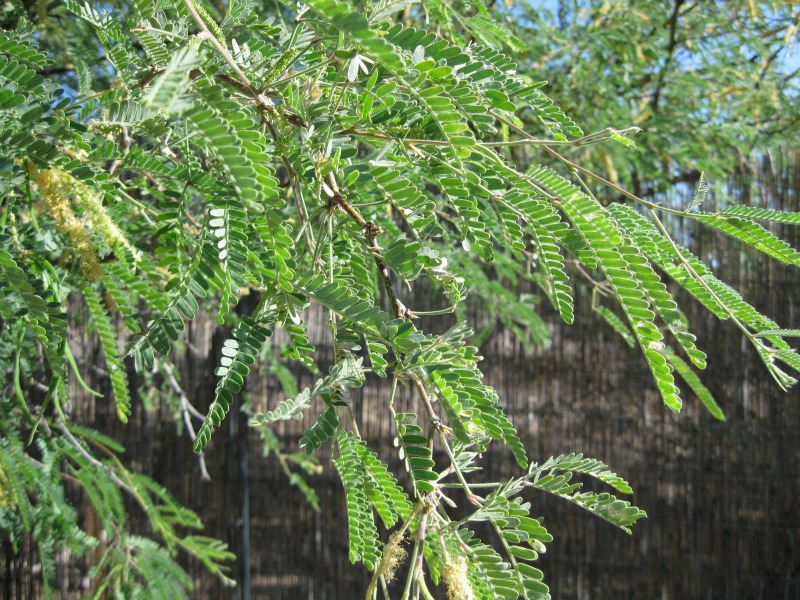
Velvet mesquite, one of our best native trees

Nothing is more frustrating than putting a lot of hard work and spending tons of time caring for landscape plants, only to have them succumb to some kind of disease or pest. If your plant is looking a little sickly, here are some common symptoms to look for to help you diagnose the problem, along with fairly simple solutions.

Is your plant wilting? Obviously, the first thing that comes to mind is lack of water. If you have ruled out your plant being thirsty, there are a number of other problems that can cause wilting. The reality is over watering can also make leaves wilt, because the roots are rotting. Make sure your plant is not getting too much water. The soil needs to dry out in between waterings so the roots can obtain oxygen. Yes! Roots need to be able to breathe.

Texas Root Rot is prevalent in the southwest, and causes significant root loss in short order. By the time you see wilting, it is dead. Plant resistant species, but never in the same spot. Which plants succumb to Texas Root Rot? Here’s a sampling:

Ash
Elm
African Sumac
California Pepper
Roses
Xylosma
Silk Oak
Bottle Tree
Roses
All stone fruit trees (peaches, plums and apricots)
All nut trees

Notice not one of those is a desert native. This is one of the many reasons why I recommend planting natives.

Some insects can cause wilting as they water out of the leaves. Look on underneath leaves for sucking insects like aphids and mites. If you see them, spray off with the garden hose. No chemicals needed.

What about leaf color changes that aren’t normal for the species? Are the leaves turning yellow? In some cases, this could be nitrogen deficiency. Planting natives usually means fertilizer is rarely warranted since they are adapted to the soil. If the plant is not a desert native, and the leaves are yellow with green veins, this is a sign of iron chlorosis, caused by a deficiency of iron in the soil, or by high pH soils. Soils with high alkalinity prevent the absorption of iron. Treating is expensive and labor intensive. It is better to choose plants that grow in alkaline soils.

Also keep in mind, that early leaf coloration is often caused by drought. Stick with desert natives with low water use requirements.

Is your plant just sitting there and not growing? One of the deadliest thing that can happen to your new tree is planting too deep. If the planting hole was deeper than the root ball, chances are it sunk into the hole and dirt has gathered around the trunk. You can try removing soil that is up against the trunk base. This might work, and worth a try. Next time remember to never dig a hole deeper than the root ball.

Many times plant problems arise because the species is not suitable for our desert climate and soils. Choosing desert native plants is a smart way to avoid many problems and have greater success with minimal effort.

Friday, September 23, 2016

Those pesky and destructive whiteflies: what's a gardener to do?


If you see a cloud of white insects flying around your vegetable garden, unfortunately this means you have the dreaded whitefly. They are especially attracted to lettuce, and are a huge problem for Arizona lettuce growers in the winter. They also attack tomatoes, peppers, cabbage and the foliage of carrots, and have a liking to herbs like parsley as well. They are a sucking insect, and can kill the plant within a short amount of time. Since they love dry, dusty conditions, the desert is a perfect climate.

They are dreaded because they multiple incredibly fast and are very difficult to control naturally. Although some experts recommend using beneficial insects for a natural control, this method is not particularly successful in the desert environment because conditions are just not that favorable for many beneficial insects to stick around and do any good. You can try sticky traps, which need replacing as they fill up with insects. Barriers such as floating row covers work, provided you get them on before the whitefly sets eggs on your plants, but this does not work once temperatures rise into the mid to upper 80’s because it just plain gets too hot under there.

Since whiteflies love dry, dusty conditions, your best bet is to hose off plants often. If you have one plant they particularly like, it may be worth it to sacrifice that one plant to reduce infestation of the others.

Wednesday, September 21, 2016

Common problems with cactus and succulents


Damaged by the Agave Snout-nose weevil


Cactus and succulents are relatively problem free, as long as growing conditions, soil, drainage and sun orientation are correct for the species. Always make sure you are purchasing plants are suitable for both the heat and cold. Not all of these plants can handle the brutal low elevation summer heat, or temperatures dipping into the teens. When in doubt: Plant natives!

Cochineal scale is relatively common on prickly pear and cholla. It is evidenced by cottony-like spots on the pads and stems. This insect sucks out nutrients. If left without treatment, it will eventually kill the plant. Control is simple by using repeated hard sprays of water. It’s important to catch this early, however. If the entire plant is covered with the white substance, it’s unlikely you’ll ever be able to get rid of it. It’s been to remove and replace the plant. As a side note, the female of the insect that causes the white cottony mass is the source of a red dye known as cochineal red. The red dye is used in clothing and candy, so if you are vegetarian, think twice about eating candy dyed red!

The cactus longhorn beetle attacks some columnar cactus and prickly pears leaving chewed areas on the uppermost parts. It is identified by very long antennae, as long as the beetle itself. Hand picking is considered the best control method, so you’ll need to be vigilant. The larvae will eat the inside of the plant, so they are hard to detect and control before the plant is dead.

Sahuaro rot (bacterial necrosis), is an infection caused by a number of things. It can result from sunburn, injury (including transport to planting site), frost damage, too much water and poor drainage. Bacteria spreads inside the plant before you notice what is happening. When a black, odorous liquid oozes out of the plants epidermis, it is too late to save. If this appears on an arm, removal of the arm may save it, but it must be caught before the rotting spreads into the main stem.

And what about those holes in sahuaros made by birds? Birds and sahuaros have lived harmoniously together for centuries, so trust me, the sahuaro will be fine. Those holes, usually made by woodpeckers, will later become homes for other critters, including bats and the tiny pygmy owl.

Some agave species are attacked by the agave snout-nose weevil. You’ll know you’ve got them if the leaves of the agave are laying flat on the ground. This insect prefers stressed plants (think thirsty, overwatered, too much sun, too little sun, poor drainage, temperatures too hot or too cold) and seems to prefer the Century Plant, one of the largest of the agave species. Infestation is hard to detect, and by the time the plant wilts it is too late. Remove, dig up the weevil, and kill it before replanting.

Sunday, September 18, 2016

The scoop on fertilizers: Is organic better than chemical versions?


If you don't have a worm bin, you'll want one!
You might tend to think that organic fertilizers are better for your plants. However, the fact is plants can't tell the difference between organic and synthetic (chemical) fertilizers. They are both used by the plant in the same way. There are basically 3 components in fertilizers. Macronutrients are Nitrogen (N), Phosphorus (P) and Potassium (K). All 3 are usually found in commercial fertilizer in varying proportions. With organic fertilizers you typically need 3 different materials to add all 3 macronutrients. In the Tucson and surrounding communities, soils high in alkalinity (pH) can be a problem, as it binds nutrients from becoming available to the plant. This makes it even harder to deliver necessary nutrients to your plants.
Aside from the 3 macronutrients, plants also need micronutrients, which are much more difficult to find in chemical fertilizers. Micronutrient deficiencies in the soil are one of the reasons food grown today is not as nutritious as it used to be. This is where the use of organic fertilizers shine. They provide much more than the basic 3 nutrients. Organic fertilizers also improve soil structure and lower pH, which increases the availability of all nutrients.
Because each type of organic matter offers different nutritional support, you will need to add as many different kinds as you can.
Types of organic fertilizers include:
Nitrogen boosters: animal manures, plant matter (such as leaves), compost, fish meal, bat guano, worm castings and blood meal.
Phosphorus boosters: bone meal, rock phosphate
Potassium boosters: kelp meal, greensand, wood ash (depending on wood type)
Micronutrient suppliers: compost (which also contains beneficial microorganisms), gypsum (which helps break up hard alkaline soils), kelp meal and worm castings.
A new addition to the world of organic soil additives are Humates. They are touted to improve alkaline soils, but are pricey.
Sulfur can be added to soil to also correct high alkalinity, but the jury is out as to how effective this is.
While plants don't know the difference between chemical and organic fertilizers, it is important to understand that organic fertilizers last longer in the soil, and, especially when using manures and compost, create a good soil structure that retains water and encourages healthy soil organisms such as earthworms. Chemical fertilizers do not amend the soil. Period.